Hey everyone! 👋 As the excitement for GTA 6 continues to build with every preview, gameplay leak, and trailer breakdown, it’s easy to get swept up in discussing graphics, map sizes, and next-gen AI mechanics. But if you want to understand why Rockstar Games holds the crown for cinematic storytelling, you have to look back at the foundation laid over two decades ago.
Before we jump into Vice City’s next-gen neon streets with Lucia and Jason, there is one iconic mission from 2004’s Grand Theft Auto: San Andreas that every GTA fan needs to revisit: “Reuniting the Families.”
Here is why this single mission was a masterclass in linear action storytelling, how it bridged the gap between gaming and Hollywood, and what it tells us about Rockstar’s design evolution leading into GTA 6.
1. The Shift: Trading Open-World Freedom for Cinematic Control
Most GTA missions take place in the open sandbox. The sheer joy of driving down freeways, causing chaos in alleyways, and executing unplanned drive-bys is what defined the 3D era.
However, open worlds lack one critical element: pacing control.
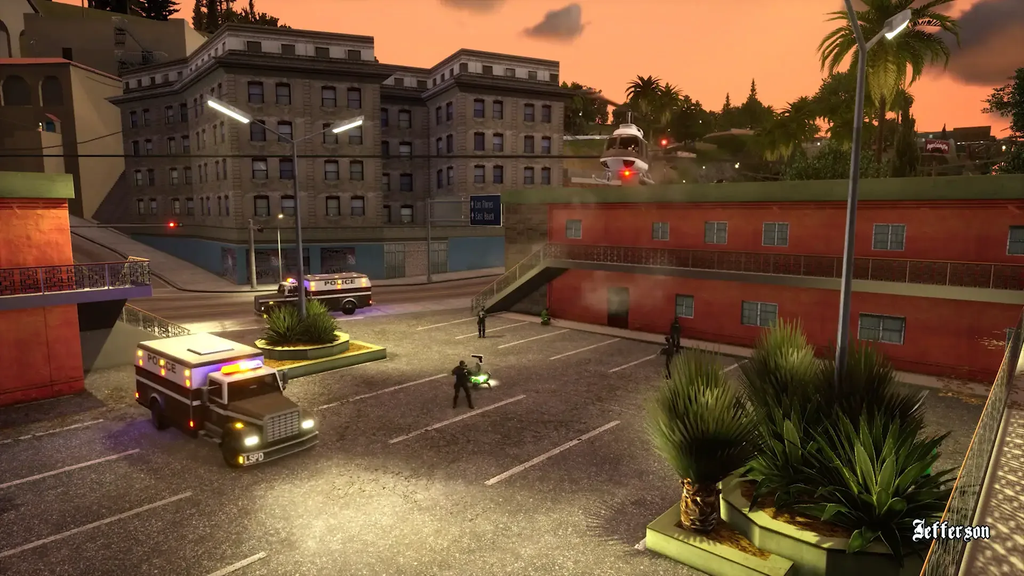
In “Reuniting the Families,” Carl “CJ” Johnson heads to the Jefferson Motel to help his brother Sweet unite the fractured Grove Street families. But as soon as the LSPD ambushes the meeting, CJ’s crew scatters—leaving Ryder famously yelling, “It’s every motherf*er for himself!”
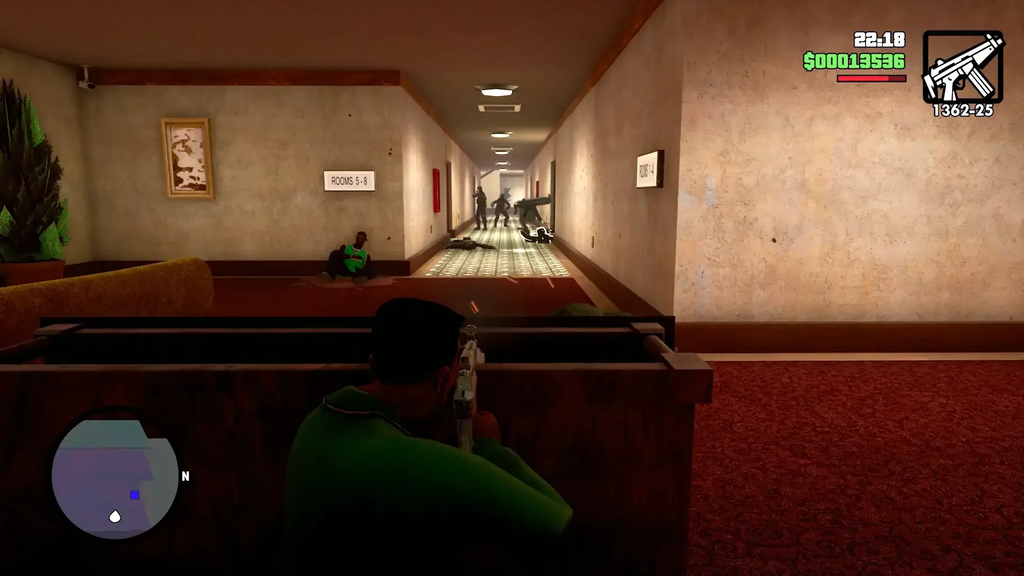
Instead of letting you drive away into the open map, the game forces you indoors. By trapping you inside tight, claustrophobic motel corridors, Rockstar transformed San Andreas from an open-world playground into an intense, scripted third-person cover shooter—years before games like Gears of War made the cover-shooter genre mainstream!
Blogger’s Insight:Indoor missions give developers ultimate control over lighting, camera angles, and jump scares. The motel wasn’t just a building; it was Rockstar’s homage to Die Hard, turning CJ into John McClane clearing floor by floor in his own mini Nakatomi Plaza.
2. Scripted Chaos: How the Jefferson Motel Shootout Was Built
What made this sequence feel like a Michael Mann action film wasn’t just the gunplay; it was the invisible trigger points meticulously placed throughout the level:
Environmental Danger: SWAT officers crashing through skylights, rappelling down air vents, and kicking doors off their hinges.
Dynamic Set-Pieces: Panicked civilians running across your line of fire and gang members getting mowed down over hall balconies.
Weaponry & Cover: Picking up dropped MP5s and rolling behind upturned tables, sofas, and laundry baskets to survive the siege.
Every single square foot of the Jefferson Motel was engineered to feel like an unscripted house of horrors, forcing players to master tactical rolling and cover-shooting under immense pressure.
3. From Corridor Shooter to On-Rails Action Rollercoaster
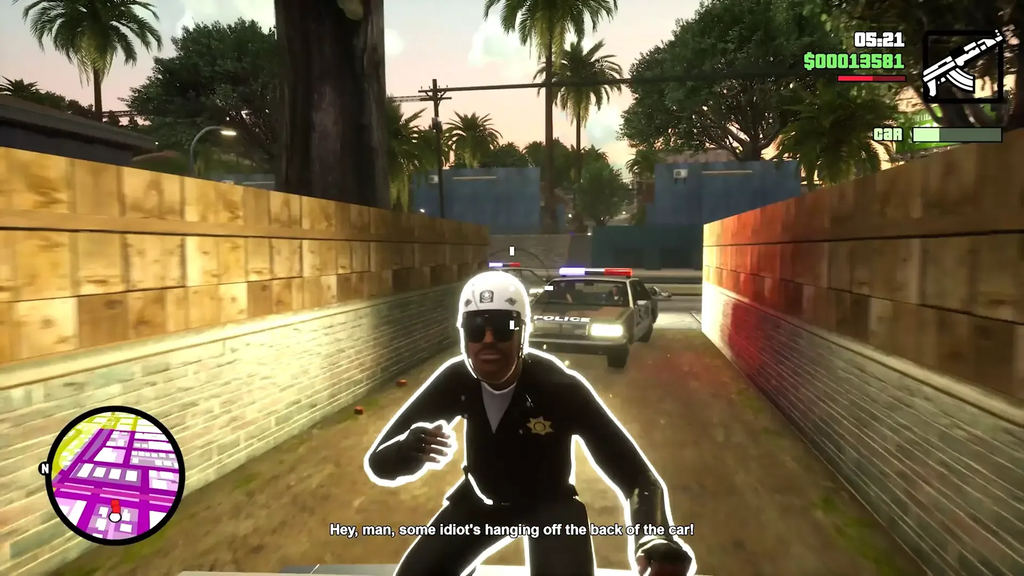
Just when you think rescuing Sweet and blowing up a police chopper on the roof is the climax, the mission shifts gears. Big Smoke and Ryder pull up in a getaway vehicle, turning the second half into a high-octane on-rails turret chase sequence.
Here, Rockstar showcased its love for classic ’90s Hollywood blockbusters:
Con Air Homage: Cops riding motorcycles jump onto your vehicle mid-chase.
Terminator 2 References: Bikers clinging to your car doors like the T-1000 before getting blasted off.
The Final Explosion: The chase ends with the getaway car jumping a ramp, crashing through a Sprunk billboard, and slamming into a fuel tanker in a glorious, mandatory fireball.
While your vehicle was on a strict, scripted track, you felt like an improvising stunt actor in a fully choreographed action movie.
4. The Rockstar Dilemma: Story Scripting vs. Open-World Simulation
“Reuniting the Families” highlighted a fundamental tension that Rockstar has spent two decades refining: How do you balance a freeform living sandbox with hyper-linear, cinematic story missions?
By the time Red Dead Redemption 2 arrived, this divide became clear. In the open world, you have absolute freedom and organic systemic consequences. But during main story missions, straying even a few feet off the scripted path often triggers a “Mission Failed” screen.
What This Means for GTA 6:
Will GTA 6 finally bridge the gap between open-world simulation and scripted story missions?
Can Rockstar give players multiple tactical ways to execute heist getaways without breaking the cinematic pacing?
Will next-gen AI allow cops and enemies to react organically inside interiors without needing rigid, pre-programmed trigger points?
My Final Takeaways
Replay the Classics: Before playing GTA 6, boot up San Andreas and replay “Reuniting the Families.” It remains one of the greatest examples of pacing and tension in gaming history.
Appreciate the Vision: Back in 2004, on PS2 hardware, Rockstar proved that video games could rival Hollywood crime cinema in style, direction, and spectacle.
The Golden Standard: No matter how advanced GTA 6’s graphics or physics become, its success will ultimately rest on whether its characters and story missions can deliver the same adrenaline-pumping, unforgettable moments CJ gave us in Los Santos.
What is your favorite mission from GTA San Andreas? Do you prefer totally freeform open-world chaos or tightly scripted cinematic set-pieces?