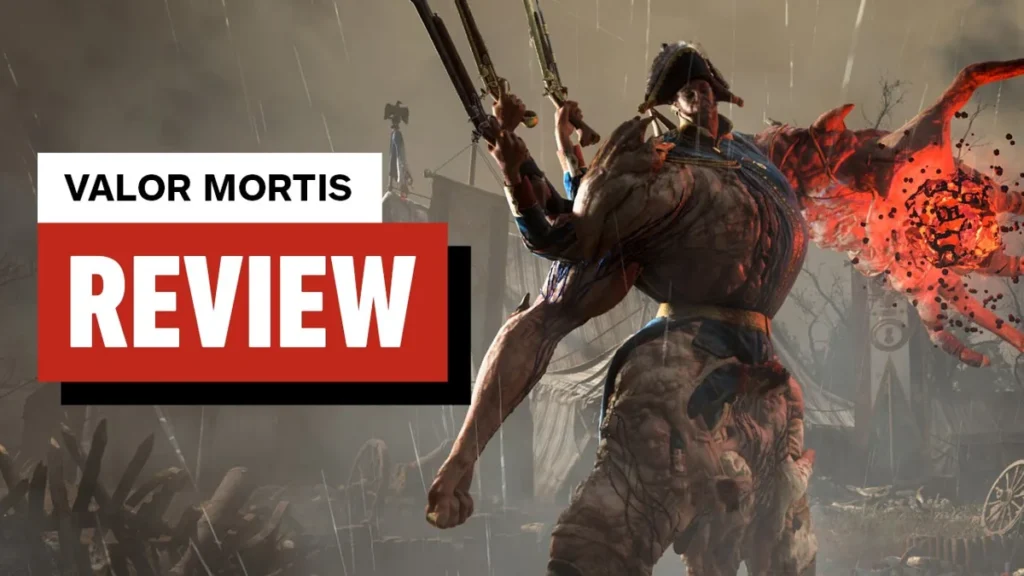
After a decade of endless variations on the dark fantasy Soulslike formula, developer One More Level (Ghostrunner) has delivered something undeniably strange: a first-person, alt-history action-RPG set in a twisted 19th-century Napoleonic Era, complete with gunplay, swordfighting, and bioshock-esque spellcasting.
It is an ambitious hybrid. While blending first-person melee, firearms, elemental abilities, and wall-running platforming doesn’t always result in a seamless experience, Valor Mortis manages to deliver a surprisingly fresh, weirdly memorable 20-hour campaign despite its rough technical edges.
Here is my breakdown of where this Napoleonic fever dream succeeds, where it stumbles, and why it’s worth a look for action enthusiasts.
1. The Combat: Gunpowder, Steel, and Corrupted Magic
The core strength of Valor Mortis lies in its visceral dual-wielding combat design.
- Tri-Hybrid Offense: You control William, an undead soldier with a mutated left arm. Your main hand wields cold steel (parrying, slashing, dodging), while your mutated hand channels elemental spells and secondary firearms (pistols and muskets).
- Tactical Synergy: Combat thrives on combining options. You can ignite a powder keg from a distance with a burst of flame, block an incoming bayonet charge, step back to deliver a close-range point-blank shot, and execute a staggered enemy.
- Build Depth & Amber Accessories: Extensive skill trees allow you to modify abilities to fit your playstyle. Equipping specific accessories—like “Perfectionist,” which scales your damage when at full health—turns combat into a high-stakes, rhythm-driven dance of flawless parries and dodges.
2. The World & Lore: Stunning Surrealism, Weak Narrative
Set in an alternate reality where Napoleon won at Waterloo only for the world to turn into a bizarre nightmare, the environmental storytelling is easily the game’s highlight.
- Eerie Level Design: From mud-soaked 19th-century battlefields littered with fallen horses to toxic ruined villages and warships suspended mid-air, the surreal aesthetics give the world a distinct identity.
- Narrative Disconnect: Unfortunately, the overarching story falls flat. It attempts a somber “war is hell” message, but the tone is repeatedly undercut by nonsensical progression—such as walking through a European cave only to suddenly emerge in an Egyptian desert fighting sphinxes.
3. The Weak Links: Boss Fights & Janky Platforming
While general encounters against rank-and-file undead soldiers are entertaining, two key areas pull the experience down:
- Forgettable Boss Encounters: Bosses are surprisingly sparse and largely disappointing. Most are either scaled-up versions of standard mobs or passive damage sponges with telegraphed attack patterns that boil down to basic wait-and-parry sequences.
- Unstable Platforming: Attempting to port wall-running and grappling mechanics into a Soulslike environment leads to frequent frustration. Misaligned ledges, collision bugs, and out-of-bounds glitches make platforming sections feel unpolished.
Blogger’s Take: When ‘Valor Mortis’ clicks, it feels like a feverish mashup of FPS mechanics and deliberate melee pacing. But the game clearly suffers from trying to do too much at once. When you combine high-speed parkour, parry-based swordplay, spell management, and shooter mechanics, the physics engine starts showing its seams.
Key Takeaways
- Incredible Atmosphere: The alt-history Napoleonic setting is one of the most unique Soulslike backdrops in years.
- Engaging Combat Loop: Combining spells, guns, and blades creates genuine tactical variety.
- Needs Polish: Expect collision bugs, camera jank during heavy melee exchanges, and performance hiccups.
What do you think of combining first-person gunplay and magic with Soulslike melee combat? Does a Napoleonic alt-history setting sound like a refreshing change of pace?