World of Warcraft: Eternity has seen its popularity surge, driven by a highly successful beta and an upcoming full release; in contrast, the Midnight expansion for the live version of World of Warcraft appears to be in crisis.
The two versions of World of Warcraft are starkly different. Eternity has proven immensely popular, with Blizzard developers reporting that its beta phase is shattering various records. Blizzard itself has also become more engaged with the player base than ever before—releasing weekly podcasts that dive into community topics, addressing concerns through forum posts, and frequently rolling out updates to resolve balance issues and bugs.
Midnight appears to be in a different situation. Its latest content update, Patch 12.1.5, went live on October 13. In addition to new story quests that continue the expansion’s main narrative, it introduces a single-player raid and a long-teased mega-dungeon (officially referred to as a “Labyrinth”), offering players who prefer solo gameplay an experience closely comparable to that of a raid.
Unfortunately, the patch was riddled with bugs upon its release. The Gindoga Labyrinth was arguably the highlight of the update, yet players encountered a wide array of issues. Some reported being unable to claim rewards for defeating bosses, while others found themselves falling through the floor—specifically in the area containing the final boss—rendering the labyrinth impossible to complete. Others noted that their adventuring companion, Valeera, would die too quickly, or that boss mechanics failed to trigger correctly.
While many of the most glaring issues (such as falling through the floor) were addressed in a hotfix released on October 16, a major problem remains: the lack of save points. When Blizzard first detailed the labyrinth, they implied that players could begin a run, make some progress, and return later to finish it. Specifically, Blizzard stated that players could “tackle the entire epic labyrinth adventure in one go, or chip away at it bit by bit over time—progressing at their own pace.”
In its current state, this is not the case; the labyrinth lacks checkpoints and must be completed in a single session. Given that a full run takes at least an hour—compounded by bugs that can halt progress and the inability to save one’s state—the experience has proven to be incredibly frustrating. It remains unclear whether the absence of checkpoints is a bug, an undocumented change by Blizzard, or simply an oversight; regardless, it is far from an ideal debut for this new feature in the Midnight expansion.
The following section contains story spoilers for World of Warcraft patch 12.1.5.
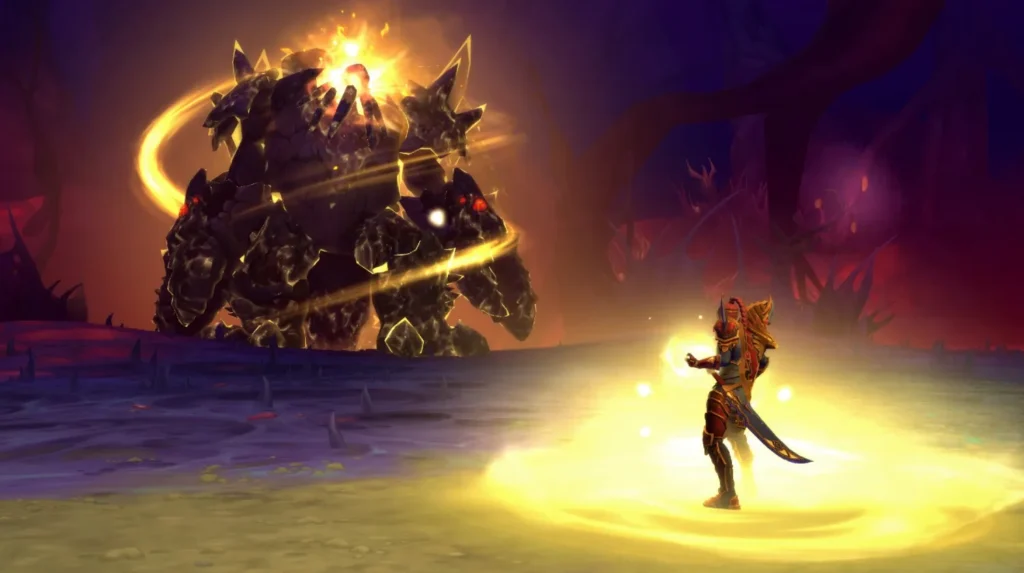
Technical issues and bugs are not the only reasons for the poor reception of patch 12.1.5. The narrative has also drawn heavy criticism, particularly regarding the abrupt death of a key character. Liadrin, a Blood Elf Paladin and a central figure with whom players interact throughout the Midnight expansion, meets her end during a battle against Xixix—a resurrected general of the Old Gods who appears as a boss in the expansion’s raid.
However, her death was not in any epic, heroic fashion. Instead, judging by the cutscene that plays after the dungeon, it appears she perished from sheer exhaustion—having overexerted the power of the Light during her battle against Kixix. After Kixix was defeated, Liadrin—just before collapsing and dying—uttered the words: “The darkness shall never prevail.”
The death of a major character is not an uncommon occurrence in World of Warcraft. Perhaps the most prominent example is the sacrifice of Alliance leader Varian Wrynn during the early stages of the Legion expansion. Unlike Varian’s epic demise, however, Liadrin’s death feels anticlimactic—a narrative turn that seems all the more superfluous given that it takes place in a “.5” patch, which is often somewhat detached from the game’s core storyline.
Even more frustrating is that her death appears to cater to a recurring and unpopular trend in recent World of Warcraft storytelling: the ease with which long-standing, deep-seated animosity between factions is resolved. In Liadrin’s case, her death facilitates an alliance between the Blood Elves and the Amani Trolls—even though Blizzard explicitly clarifies in post-raid quests that, despite the current state of peace, the two groups are not true allies. While Blizzard may have claimed at BlizzCon 2026 that they intend to bring “war” back to World of Warcraft, the recent narrative trajectory—underscored by Liadrin’s death—consistently shows former arch-enemies joining forces.
This is not the first time World of Warcraft players have been dissatisfied with a “.5” patch. Just this past April, the release of patch 12.0.5 was so riddled with issues that it sparked a major outcry from the player base. Blizzard even issued a public apology, stating, “We will learn from this release to ensure it doesn’t happen again,” and promising, “We will do better.” Yet, six months later, little seems to have improved.
This leaves the Midnight expansion in a rather awkward position. At this year’s BlizzCon, Blizzard had almost nothing to say about the current state of World of Warcraft. They offered only a teaser for the final content patch of Midnight—in which players will face off against Xal’atath—while providing no further details on the subsequent expansion, The Last Titan, despite it being slated for release next year.
Blizzard is not pouring all its resources into the development of World of Warcraft: Forever; rather, it is positioning the title as a fresh take on the MMORPG—inspired by World of Warcraft Classic—that introduces new content and visual enhancements to the classic world of Azeroth. In an interview with GameSpot, Blizzard shared further details regarding the future direction of World of Warcraft: Forever and its endgame content. World of Warcraft: Forever is set to officially launch on November 4.