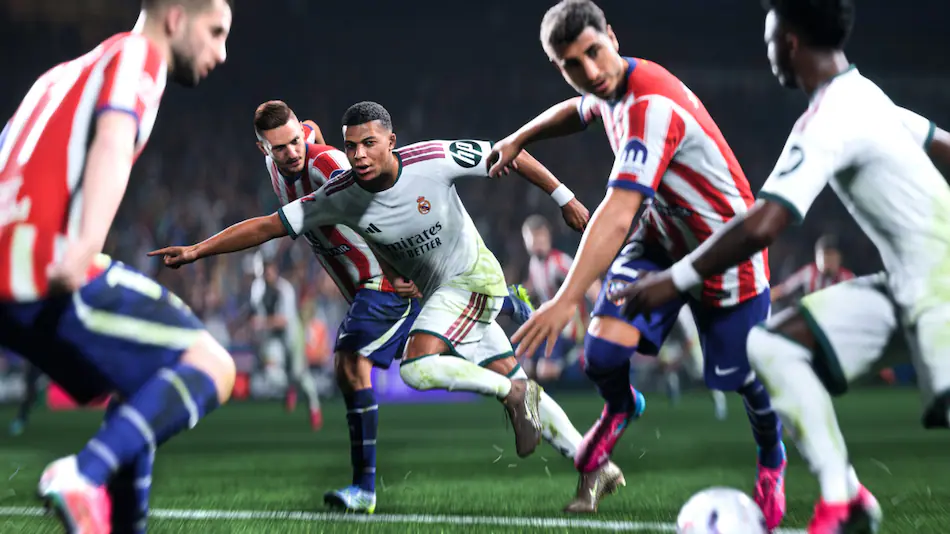
For over two decades, EA’s soccer games have been defined by one of the most iconic taglines in gaming history: “EA Sports—it’s in the game.” Now that the FIFA series has been rebranded as EA Sports FC, that slogan is more relevant—and perhaps more necessary to keep in mind—than ever. Once focused squarely on the action taking place on the pitch, EA’s arcade-style soccer simulations have shifted their attention toward everything happening off it. The match itself now seems less significant than the elaborate spectacle surrounding it.
EA Sports FC 27 perhaps best exemplifies the series’ relentless expansion. Beyond “Ultimate Team”—the controversial yet highly lucrative core mode—the game introduces an open-world mode called “The Grounds,” where players can engage in online street soccer matches and various mini-games. This annual soccer carnival just keeps getting bigger, with a ticket booth set up under every tent.
EA markets this mode as a social hub where players can immerse themselves in soccer culture, from back-alley kickabouts to the atmosphere outside the stadium. In reality, however, it is simply another mechanism for the company to squeeze more profit out of the FC franchise—as if the existing glut of loot boxes, premium battle passes, and slot-machine-style player packs (all while charging full price every single year) weren’t enough. Innovation on the pitch and much-needed gameplay improvements have been cast aside, even as the game itself continues to bloat.
But the truth is, after spending far too much time in the social hub of FC 27, I have to begrudgingly admit that this new mode is actually quite fun. It’s silly and juvenile, yet it possesses an addictive, hard-to-resist quality. While the mode suffers from matchmaking issues, bugs, and clunky, awkward controls, its lighthearted, social atmosphere stands in stark contrast to the cutthroat, hyper-competitive nature of other online modes. Surprisingly, despite its flaws, the new open-world mode in FC 27 proves to be a positive addition overall.
To EA’s credit, improvements have been made elsewhere, too. The transfer market in Career Mode has finally undergone a complete overhaul. Gone are those awkward, silent, and frankly ridiculous cutscenes for player negotiations. In their place, FC 27 introduces a streamlined, intuitive transfer system that integrates TransferRoom—an industry-leading platform widely used by professional clubs—and utilizes its proprietary “Expected Transfer Value” (xTV) metric to provide more realistic player valuations. Furthermore, transfer terms are now far more detailed, covering everything from performance-based bonuses to buy-back clauses, injecting a much-needed sense of authenticity into Career Mode.
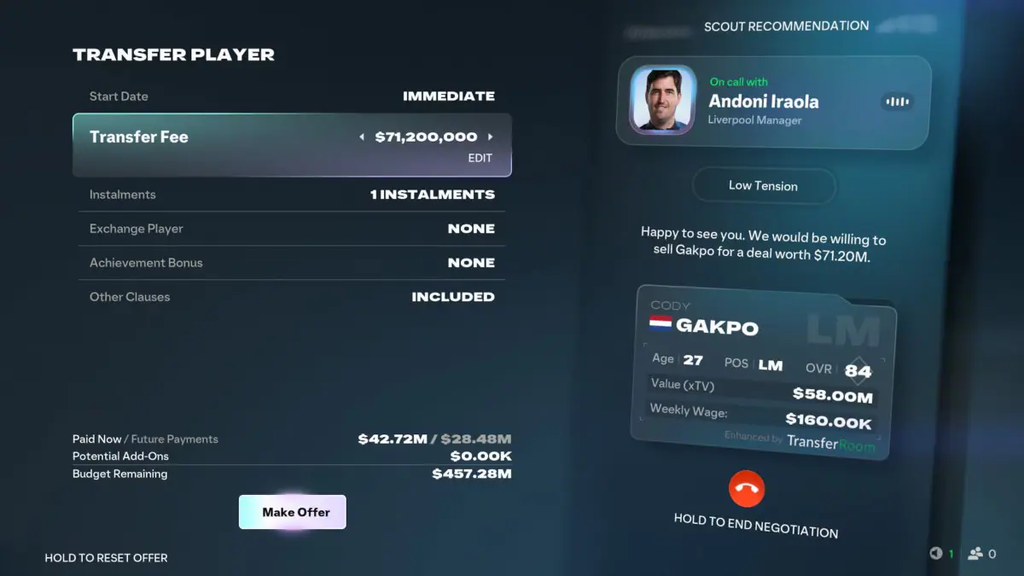
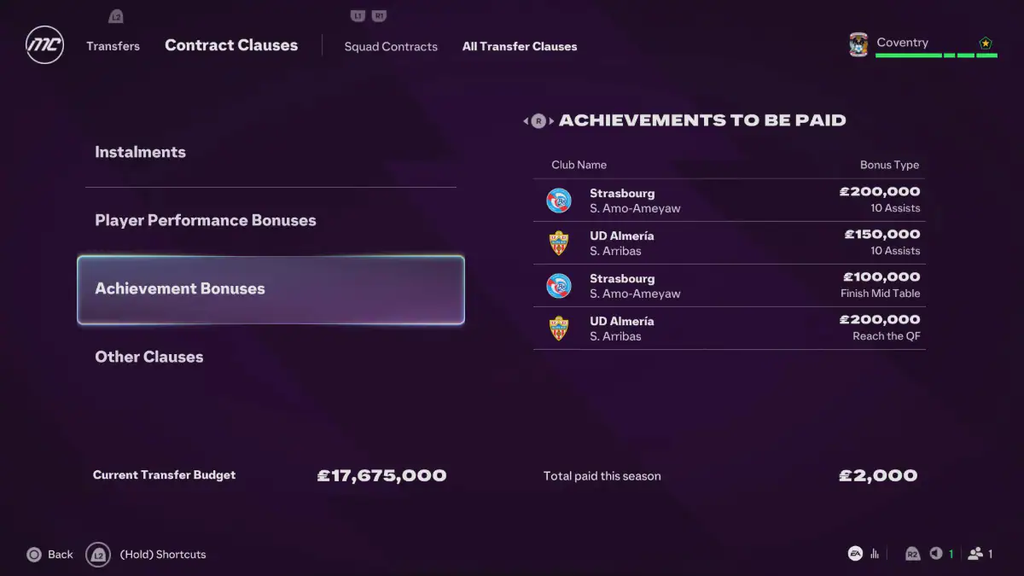
The transfer economy system has also been improved. You can now pay transfer fees in installments, negotiate salary increases based on seasonal performance, and pay agent commissions. These negotiations are broken down into multiple stages, during which unexpected developments can arise to disrupt your plans. Rivals might swoop in to hijack a deal, or you could find yourself locked in a bidding war for a promising young winger. Alternatively, a player might simply decide against the move altogether. These details—clearly inspired by the Football Manager series, though far less rigorous—make the transfer process more engaging and interactive. As a manager, you have more granular control over the transfer process, resulting in a deeper and more satisfying simulation experience.
The transfer system is not without its flaws. While it provides a more realistic framework for signing or selling players, certain mechanics can still be glitchy. For instance, back-and-forth negotiations with clubs can sometimes lead to bizarre outcomes: a club might state their asking price and preferred payment terms, but when you counter with more favorable conditions, they suddenly hike their initial asking price—as if you were negotiating with the mafia. I also encountered a frustrating bug: when trying to sell a player, even after I had accepted an offer from another club, the player repeatedly failed to reach an agreement on personal terms with the interested side.
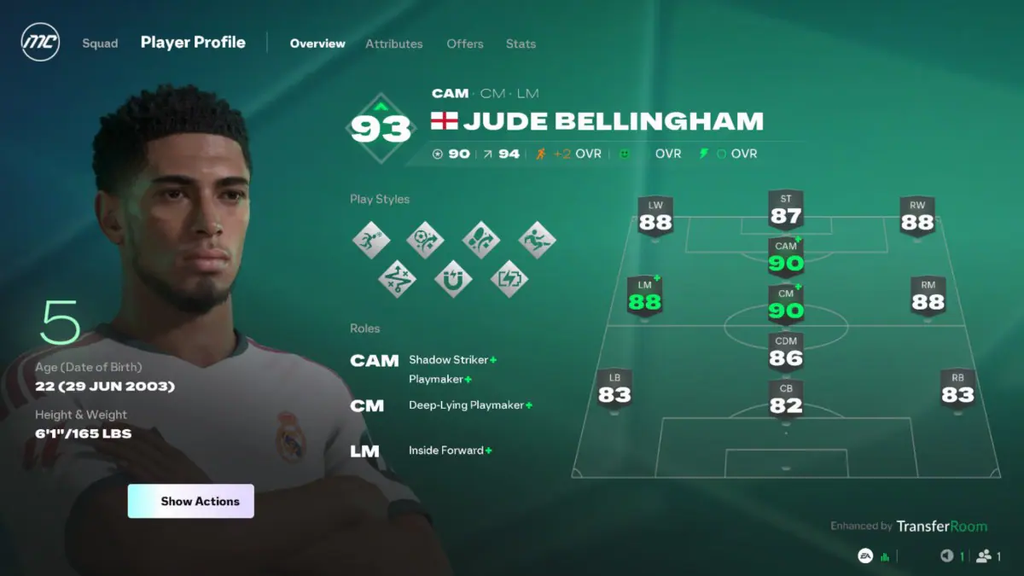
Career Mode has seen improvements in other areas as well, such as a brand-new dynamic overall rating system. This system adjusts a player’s rating based on factors like their current form, fitness, playing time, and morale. It makes squad rotation more meaningful and incentivized, as I now have to carefully manage player fitness and team morale to prevent overall ratings from dropping. Player data has also been enhanced; there is now a dedicated menu where you can view a player’s detailed development curve. This menu ranks players based on their attributes relative to your current squad, helping you determine whether a player is merely a backup for an existing position or a significant upgrade capable of breaking into the starting eleven. These rankings are particularly useful when scouting for new talent and assessing how well a player might fit into your team.
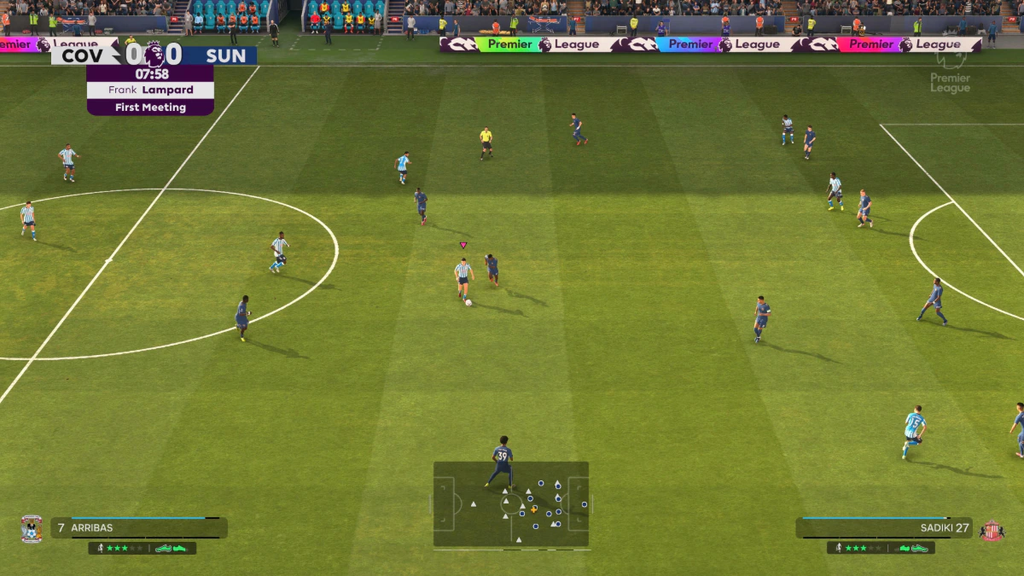
While the core tactical system remains unchanged, EA has made positive adjustments to manager evaluations, the scouting system, transfers, the Team Hub, and the user interface. Furthermore, the scope of simulated leagues has expanded—from five in EA Sports FC 26 to ten in FC 27—adding a greater sense of authenticity to the broader football ecosystem. The club you manage no longer feels like a lone protagonist performing amidst a collection of props; instead, it feels more like an integral part of a grand, interconnected football landscape. However, there have been no comparable, significant improvements to the actual gameplay. EA has introduced a second iteration of the “Realistic Gameplay” preset—first seen in FC 26—promising more authentic player movement, deeper off-the-ball control, and smarter AI. Yet, on the pitch, the actual experience still falls far short of being truly satisfying.
EA Sports FC 27, a football simulation game released in 2026, still falls short of the fluidity found in PES 2021—a title from six years prior. During the pandemic, I spent hundreds of hours playing Pro Evolution Soccer (PES), and its on-pitch performance remains unmatched by any of the newer entries in the FC series. While the “Authentic Gameplay” preset introduced last year brought notable improvements, it failed to resolve issues that have plagued the franchise for years. The controls in FC 27 remain clunky. AI behavior—particularly that of your own teammates—is frustratingly inconsistent and riddled with flaws; your team frequently violates the most fundamental tactical principles of football, often to the point where you might feel like throwing your controller.
Even when you’ve set specific tactical instructions for your team and individual player positions, you’ll often find players acting in direct contradiction to your orders. When you want your formation to remain compact, players leave gaps for the opposition to exploit; when you want to stretch the play, your wingers refuse to make the necessary runs. Furthermore, marking and pressing have become little more than a gamble.
That said, FC 27 has made positive strides in defense, placing a greater emphasis on player control rather than relying on AI-assisted actions. To this end, the “Competitive” preset has removed automatic tackling. AI teammates now adopt a more conservative defensive stance, encouraging players to take the initiative in pressing, tackling, and winning back possession. FC 27 also aims to offer more freedom during corner kicks—an area that had remained largely unchanged for years. Players can now adjust the positioning of their attackers, allowing them to find open space within the penalty area to receive a cross. While this mechanic may be challenging to master at first, it becomes more intuitive with time, resulting in corner kicks that feel far more authentic and natural—a welcome departure from the rigid, formulaic set-piece rules of previous installments.
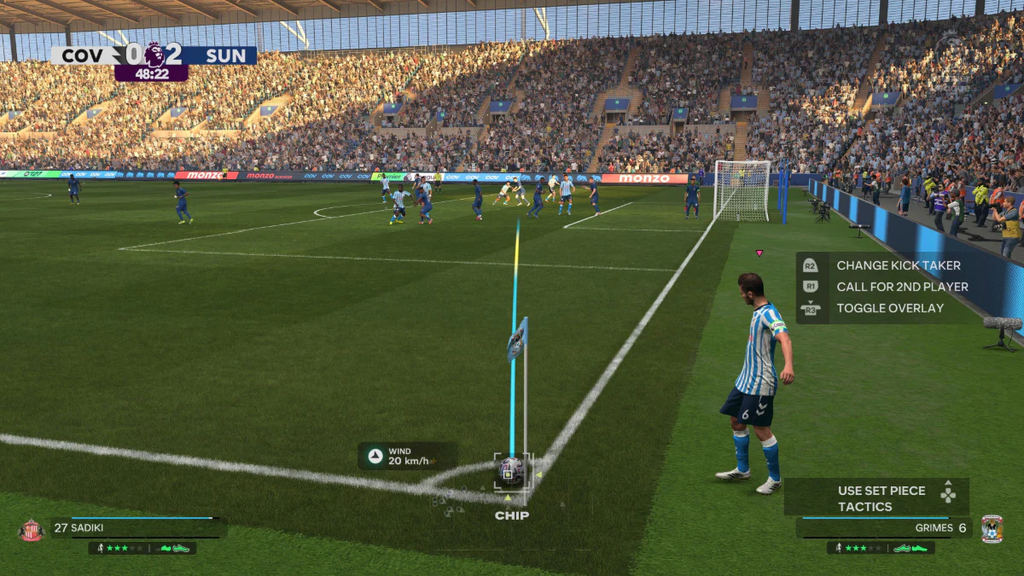
FC 27 also introduces new controls for off-the-ball movement. By holding down the shoulder buttons on their controller, players can now trigger AI-controlled teammates to make curved runs—maneuvering around defenders to carve out space on the pitch. Similarly, the “pass-and-go” mechanic has been updated; players making these runs will now follow curved paths to better exploit open areas. While these nuanced gameplay options are a welcome addition, they fall short of fundamentally transforming the overall experience on the pitch. The absence of VAR is also a disappointment, especially given how deeply this controversial technology has come to shape the sport of football today.
Rather than merely tinkering with existing mechanics, EA Sports FC 27 opts to expand the “pitch” by introducing entirely new content. As I mentioned earlier, these changes have had a surprisingly positive impact. The “Stadium Mode” stands out as a major highlight—it is a solid, engaging addition with plenty of room for further refinement in future installments. This brand-new, open-world social hub holds immense potential; it could evolve into a highly interactive space for hosting mini-games, street-style matches, and various live events. During my time in this mode, I met several strangers online and had a fantastic time playing 4v4 “Rush” matches, as well as 3v3 and 2v2 games.
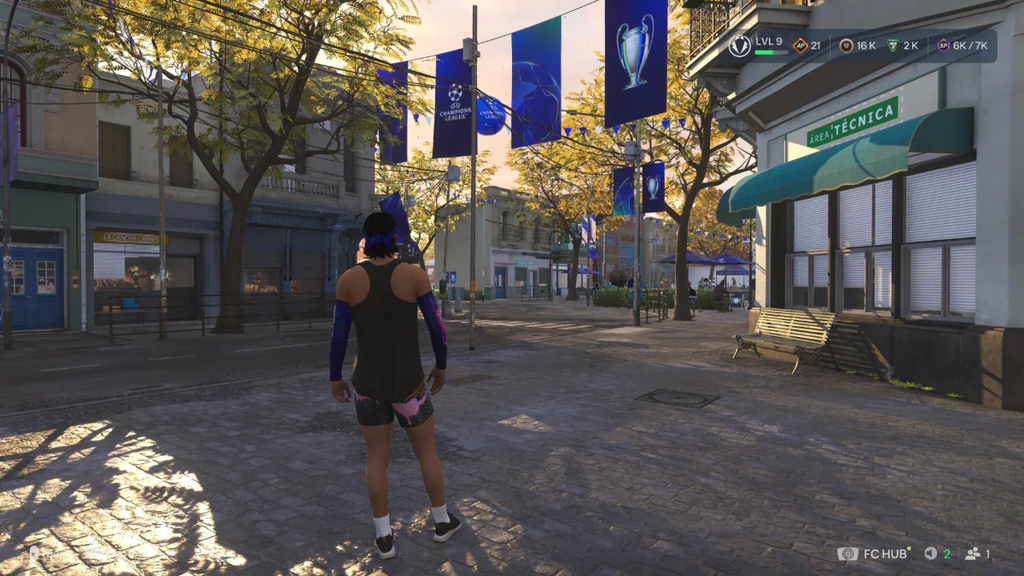
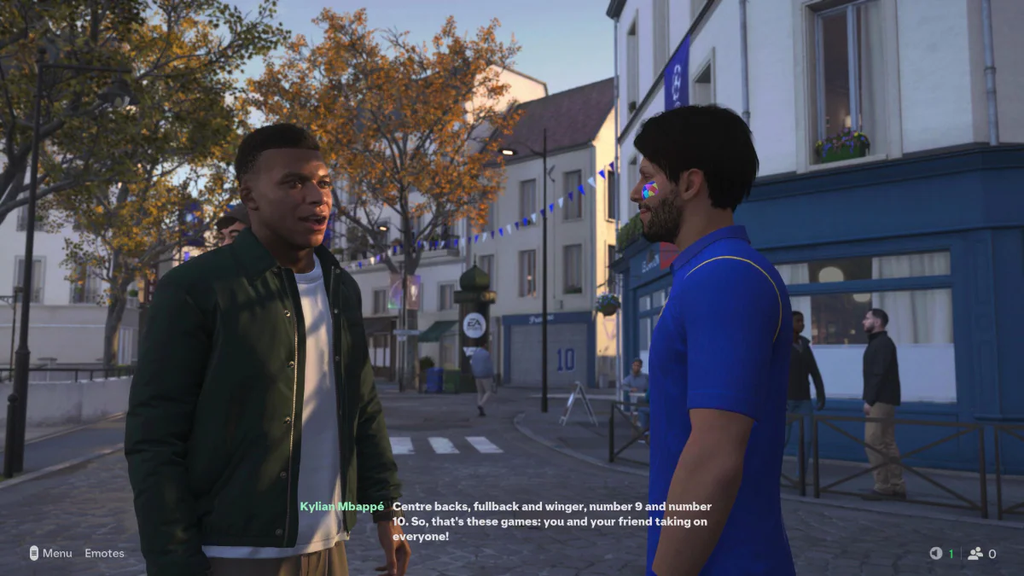
Whether you’re competing in online matches or completing guided objectives, “The Grounds” mode offers unexpected fun. It features a compact open world divided into three distinct zones—each inspired by the unique football cultures of Paris, Argentina, and England—with real-life superstars Kylian Mbappé, Paulo Dybala, and Chloe Kelly serving as mentors. These three, alongside the return of Alex Hunter—the original protagonist from the “Journey” mode in FIFA 17—guide you through everything “The Grounds” has to offer. The mentors are voiced by the players themselves, which leads to some interactions that feel notably stiff—yet unintentionally hilarious. I nearly burst out laughing when Kylian Mbappé recounted his experiences growing up playing football in France.
Within “The Grounds,” I particularly enjoyed the 4v4 “Rush” mode, while the 1v1 matches proved equally exciting and intense. However, while the small-sided street football matches shine, the football-themed minigames—dubbed “Kickabouts”—feel poorly designed; furthermore, it’s often difficult to find other players to join these sessions. “The Grounds” also suffers from various visual bugs and glitches, compounded by long wait times and a bloated user interface and menu system. Despite these flaws, “The Grounds” remains a worthwhile addition to the FC series. If EA were to focus on expanding and refining the mode’s features—rather than pushing microtransactions and in-game storefronts—it could easily become a signature staple of the franchise.
Ultimate Team has introduced a few new features, most notably the “Gallery”—a brand-new card-collecting system that lets you gather players across various categories, much like collecting classic Panini stickers. Squad Building Challenges (SBCs) have been streamlined, though they still demand a significant time investment, especially if you’re aiming to secure a special-edition player card. That said, FUT feels more generous now, offering solid options and enabling online competition against other players. Through gameplay progression, Season Passes, SBCs, and objective rewards, you can build a competitive club. Nevertheless, Ultimate Team’s heavy reliance on a cash shop, casino-style “slot machine” player packs, and aggressive monetization remains a major point of frustration.
Another area where EA Sports FC 27 stagnates is its graphics and visual presentation. Following the game’s release, I’ve seen many players on social media complaining that the visuals in the FIFA and FC series have been in decline for years. Comparisons between FIFA 17 and FC 27 do little to help this latest entry stand out; while player models are admittedly more detailed, the in-match visuals haven’t seen any significant improvement. In fact, footage from older titles reveals superior, more realistic lighting, stadium shadows, and weather effects. Today’s in-game visuals, despite having more granular detail, end up looking flatter. EA has gone an entire console generation without delivering a comprehensive visual overhaul for the series; they need to achieve a meaningful visual leap in future FC installments.
As the latest entry in the EA Sports FC series, EA Sports FC 27 feels like a compromise—a collection of long-overdue improvements rather than a comprehensive upgrade. The game oscillates between progress, stagnation, and regression. To its credit, some updates are genuinely refreshing, most notably the “Pitch Mode” with its focus on social interaction. The long-awaited overhaul of the transfer system in Career Mode is also a welcome addition, though it has arrived far later than expected.
Meanwhile, the incremental gameplay tweaks made year after year continue to yield negligible results. While the “Authentic Gameplay” preset introduced in FC 26 was once hailed as a major leap forward, FC 27 fails to build upon that foundation or elevate the on-pitch experience any further. To truly reach its potential, the EA Sports FC series requires a radical gameplay overhaul rather than mere iterative updates. As it stands, the franchise appears to have abandoned any recent momentum toward innovation.