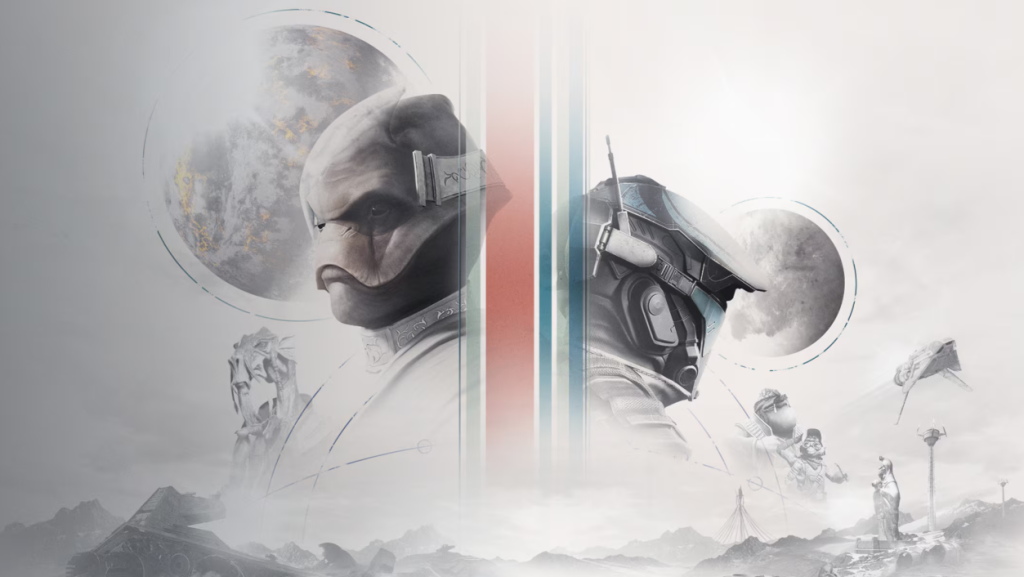
Switching to Star Wars: Episode I – Racer after playing Republic Commando feels like getting hit with a whip. Unlike Republic Commando—or many other recent Star Wars titles like Jedi: Survivor and Squadrons—Racer makes no attempt to emulate the sci-fi fantasy narratives found in the films and other related media. Instead, it is utterly absurd. We aren’t making morally grey choices in a battle against an evil empire here; no, we are racing to win a championship and take down a comically villainous, wealthy rival who is attempting a hostile takeover of the league. Oh, and we get infinite attempts to race, with the protagonist, Anakin, walking away unscathed even from the most catastrophic crashes. A moment’s thought reveals just how ridiculous the logic is.
Yet, it is precisely this absurdity that captures the essence of racing in the Star Wars universe. Competitors strap themselves into barely functional death traps and chase one another at breakneck speeds—hurtling over lava, weaving through narrow desert canyons, leaping across acid-filled ravines, and skimming along icy cliffs—all amidst the cheers and jeers of bloodthirsty spectators. The entire spectacle is ludicrous, and it is this very irrationality that allows Racer to not only fit perfectly into the fantastical world of Star Wars but also deliver an incredibly fun gaming experience.
In the game, you play as Shade, a former racer turned cargo pilot. Shade returns to the track to do a favor for the league chairman and to exact revenge on Kesta Burr—an arrogant champion who had wronged him in the past. Galaxy Racer doesn’t spend much time on exposition; instead, it keeps the details of Shade’s quest for vengeance shrouded in mystery. What exactly did Kesta do to Shade? Why does Shade always wear a helmet? Why is he so obsessed with making Kesta recognize his true identity beneath that helmet? Don’t you want to know? Of course you do!
However, while the intrigue surrounding Shade, his relationship with Kesta, and the Racing League’s influence on the galaxy drives much of the narrative early on, the eventual resolutions to these mysteries are disappointing. The story does provide answers, but they are often glossed over in brief exchanges devoid of genuine emotion from Shade or the other characters. Although the voice direction is solid, the delivery often feels stiff, and the character models remain largely static, lacking any meaningful movement or facial expressions. While these flaws don’t ruin the Galaxy Racer experience, they do undermine the emotional depth the story should have possessed.
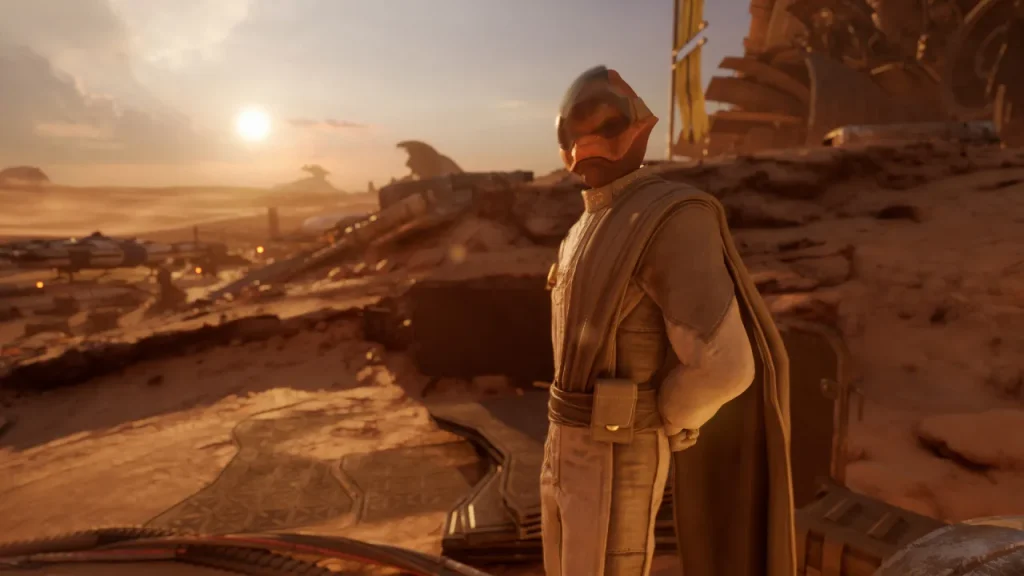
The highlight of this game is its approach to storytelling. Galaxy Racer does not feature a traditional single-player campaign; instead, it is a roguelike. To challenge Kesta, Shade must first qualify for the racing league by winning qualifying races across various planets. If Shade is eliminated—due to excessive crashes or losing a crucial race, for instance—they must fly back to the starting planet, Jakku, and begin the run all over again.
This makes for a brilliant gameplay loop for a racing game. While the sequence of planets remains fixed (at least in the early stages—more on that later), the specific path Shade takes across each planet is entirely up to the player. In each run, Galaxy Racer randomly generates two or three distinct routes; these paths intersect at specific points, sometimes narrowing down to a single track and other times branching out into multiple options. Furthermore, every stop along the way triggers a different type of event.
For instance, you might simply enter a straightforward race or be invited by another character to test-drive a custom vehicle. One of my favorite types of events is the “Mysterious Encounter,” where Shede runs into a friend or foe for a chat—the mystery lies in the fact that you don’t know who you’ll meet until you select the event. I recall one instance where Kesta demanded compensation from Shede for a minor scrape; when Shede refused, my vehicle exploded right on the starting line of the next race—costing me a retry—while Kesta gloated that I shouldn’t have crossed him. The scene was both hilarious and unexpected, making me laugh out loud (don’t worry, I pulled myself together and won the race in the end), but it perfectly illustrates how the paths you choose can lead to unforeseen consequences. The most perilous of all events is the elimination race, which gradually knocks out trailing drivers one by one; making it to the finish line earns you bonus rewards, but if you can’t keep up, you not only lose the race but also get sent all the way back to the starting point on Jakku.
The limited options for your next move create an exhilarating sense of risk versus reward. Tackling higher difficulty levels might require upgrading your car to finally conquer that ultimate qualifier—an event brutally tough on anything but the easiest setting—yet a single setback could force you to start all over again. A palpable tension permeates the entire campaign, underscoring the importance of the narrative in a way that mere between-race dialogue simply cannot achieve.
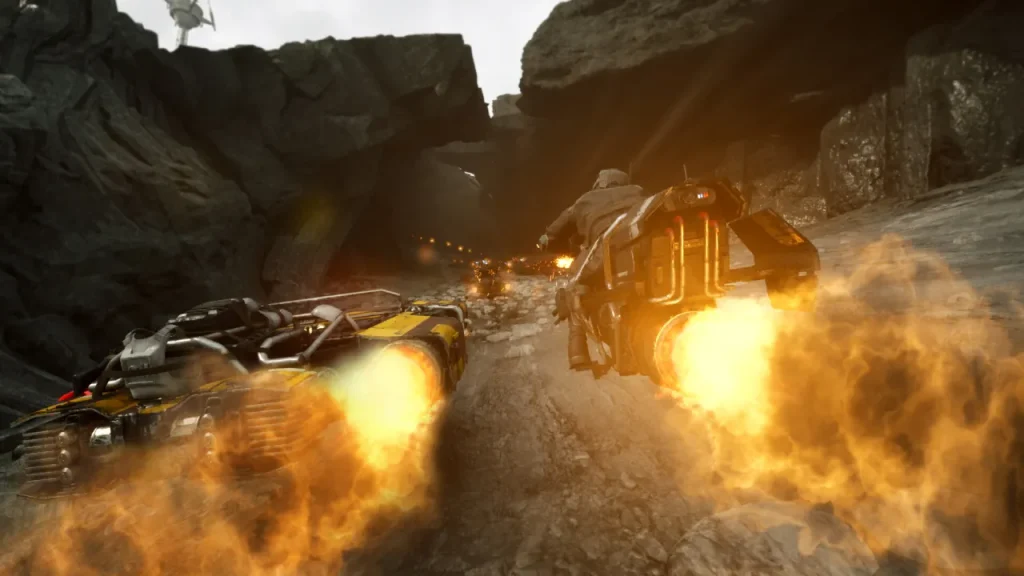
That sense of tension permeates every moment. In Galactic Racing, there are no guide lines, no voice prompts telling you where to go or what to do, and no rewind feature to undo mistakes. This means every decision is entirely in your hands, and you must react with lightning speed given the breakneck pace. From the roar of the craft rumbling through your controller and the environment blurring past, to the sound effects simulating objects whizzing by, you feel like you are hurtling forward at a lethal velocity; only your quick reflexes can save you from the countless career-ending crashes that lurk around every turn. This isn’t a roguelike where you weigh pros and cons or make cautious strategic choices; mastering this rocket-powered hover-craft requires trial and error to build muscle memory, hone your reflexes, and—perhaps—even tap into the Force.
The design of every track revolves around this core concept. While each planet presents unique challenges—such as Jakku’s scorching sun that accelerates engine overheating, or Sentinel Prime’s acid pools that melt your craft if you hover over them too long—almost all tracks feature narrow tunnels, obstructive hazards, and hairpin turns. Although there are exceptions (like the oval track on Crait, set amidst vast salt flats), most courses constantly force you to fight for space against other racers and make split-second judgments in tight quarters.
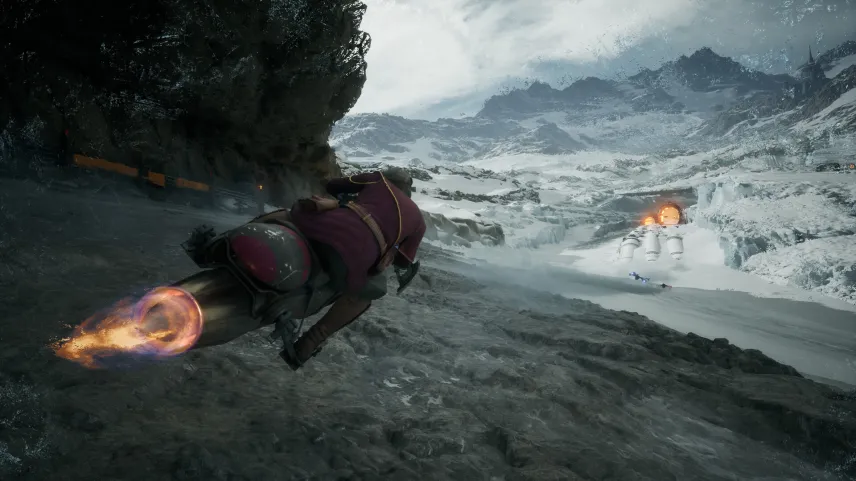
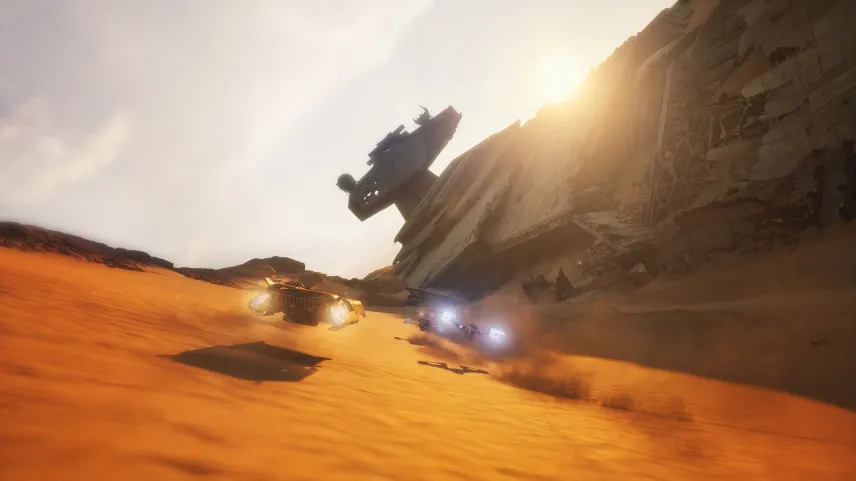
On some planets, the race tracks even encourage you to take the tightest lines. For instance, you might bypass open sandy stretches to weave at high speed through the wreckage of a Star Destroyer—briefly escaping the scorching sun of Jakku—or, on the planet Endor, carefully navigate between the narrow heat lamps scattered along the course to keep your engines from freezing. These tight spaces heighten the sense of speed, as you must squeeze through obstacles in the blink of an eye to gain the lead. Pulling this off is exhilarating, and forcing or baiting an opponent into a high-speed crash is even more thrilling.
Success in races earns you points to upgrade vehicle stats—such as punchier acceleration or tighter cornering—as well as cash to buy parts for modifying your craft. I’ve always been a fan of parts that maximize speed: things that let me slingshot off an opponent’s slipstream, or push the craft’s small-but-mighty ramjet engine to its absolute limit—even if it means the engine eventually explodes and takes me out with it. Basically, I’m willing to try anything that makes me go faster. That said, I’m never afraid to experiment with other approaches or explore entirely new strategies. I’m sure that once Star Wars: Episode I – Racer launches, tier lists will pop up telling you which parts are must-buys and which to avoid, but I don’t think there are any truly “bad” parts in the game. It encourages experimentation and never punishes you for trying new methods or adopting different racing strategies. As long as you cross the finish line, it’s all worth it.
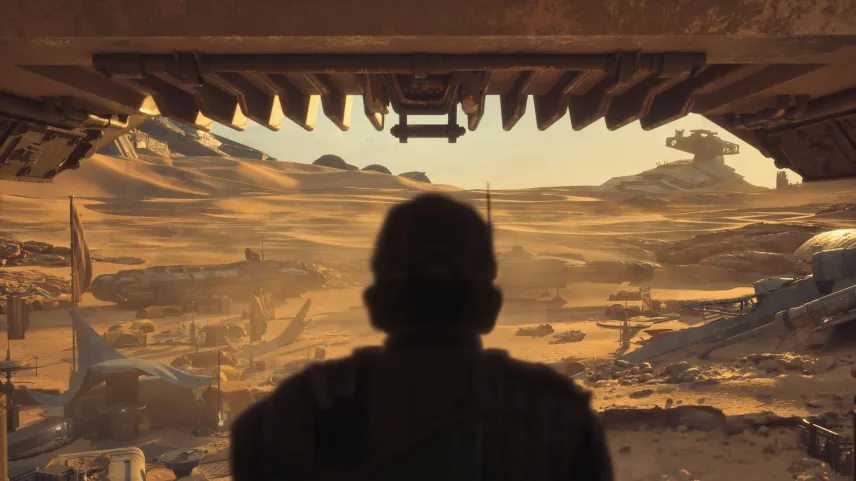
If you fail to make it to the end, you lose all the modifications and upgrades made to your craft’s parts, but you can use the points accumulated across races to unlock stronger starting stats. You can also spend these points on other types of vehicles; while you begin with a balanced land-speeder, a lightning-fast speeder bike or an agile glider might suit you better. There is a separate currency for cosmetic upgrades—changes that serve no purpose other than making your vehicle look exactly how you want it. I had put so much effort into customizing the appearance and initial stats of my starting land-speeder to ensure it was perfectly tuned for the start of every run that it was hard to let it go. However, Galaxy Racer features a very forgiving stat-reset mechanic, so trying out the other two vehicle types—and falling in love with the glider’s razor-sharp handling—didn’t cost me much beyond time.
Additionally, meeting specific objectives or proving your worth to other characters during a run unlocks new starting playstyles and perks for future attempts. Playstyles determine your initial loadout—such as stronger shields to withstand hits or ion blasters to stun opponents—while perks offer bonuses like the ability to restart after disqualification or earn extra cash for causing opponents to crash. After playing Galaxy Racer for over 15 hours, I was still unlocking new content with every run. While this sense of constant progression can’t last forever, it kept every session engaging for a long time. Falling short just one or two events shy of the ultimate goal was certainly frustrating, but at least I knew there would be plenty of cool new content to try next time.
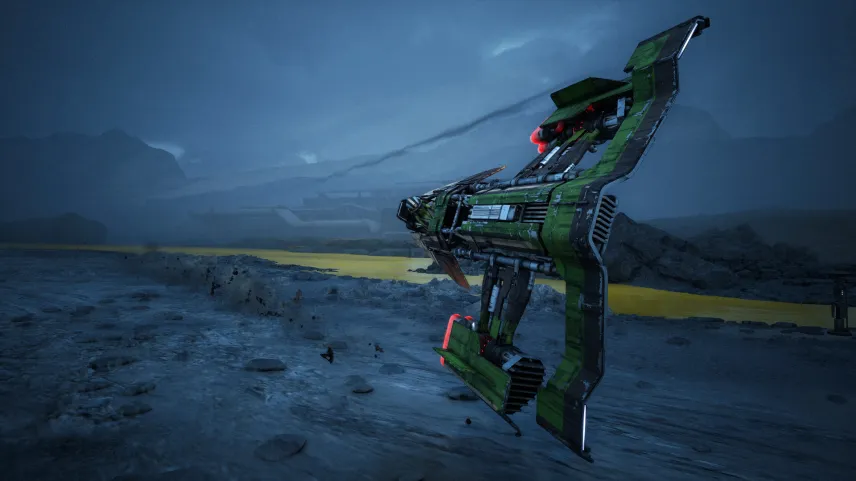
I really can’t wait to jump back in for another round. Blending racing elements with the loop mechanics of a roguelike creates a sense of accomplishment that is truly addictive—making every replay feel engaging and fun.
Qualifying for the competition is merely the first act of the story. As the narrative unfolds, subsequent chapters introduce new planets and shift the race order. New track types and environmental hazards—such as mines, storms, or darkness—come into play. Sponsors enter the picture, tasking you with completing specific challenges during races to earn their favor and financial rewards. Additionally, a betting system allows you to wager on beating specific rivals in a race, enabling you to spark short-lived rivalries and profit from them.
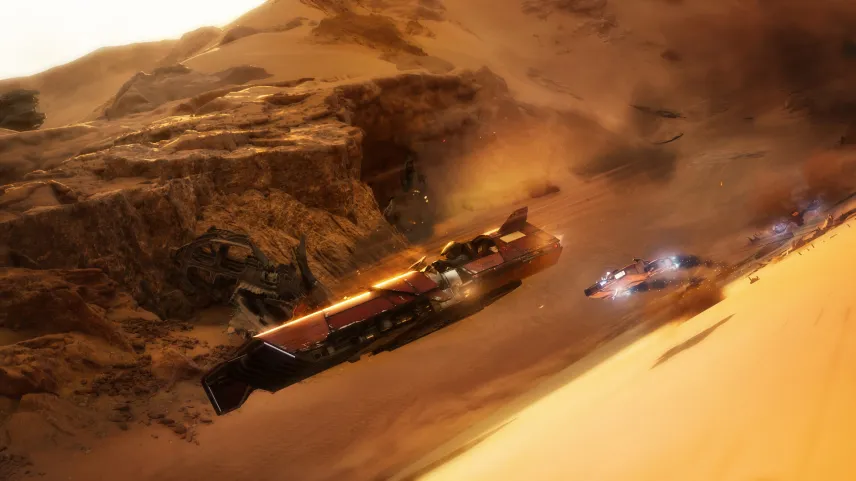
As the game’s features and mechanics expand, so does the number of events you must complete to progress to the next chapter. What begins as a simple roguelite racer—with runs lasting 20 to 40 minutes—eventually evolves into a grueling test where every skill you’ve honed is put to the limit during epic planetary adventures that can stretch well beyond an hour. Furthermore, there is no mid-run save feature; you have to leave the game running and put your console or PC into standby mode (something I frequently had to do, as maintaining near-perfect racing performance for 60 minutes straight is simply brutal). In the final stages of the story, every mistake filled me with dread, yet completing a run and hitting a narrative milestone triggered a massive adrenaline rush and an overwhelming sense of accomplishment. I still haven’t conquered the ultimate Galactic Racing challenge—I failed at the penultimate event and had to sit down to write this review just to calm my nerves—but all I can think about right now is giving it another shot.
Admittedly, it is not without its flaws. Galaxy Racing features a diverse array of tracks—offering enough variety to keep every run feeling fresh, yet not so many that you can’t gradually familiarize yourself with the layouts, devise strategies, and discover shortcuts. However, the signage on some tracks—particularly those set on Jakku—is confusing, making it easy to lose your way or take a wrong turn.
As I played, the lack of a standout soundtrack became glaringly apparent. Recent Star Wars titles—such as the Jedi series and Outlaws—have begun to deeply explore the culture of that galaxy far, far away, and a key part of that immersion is hearing the music and radio broadcasts that populate the game world. Consequently, I found it puzzling that Galactic Racer offered no music during races other than generic ambient sounds for each planet, brief victory or defeat jingles, and the repetitive shouts, quips, taunts, and declarations from racers as they overtook, were overtaken, won, or lost. By the eight-hour mark, this repetition had become somewhat tedious; having alternative music options might have helped alleviate the issue.
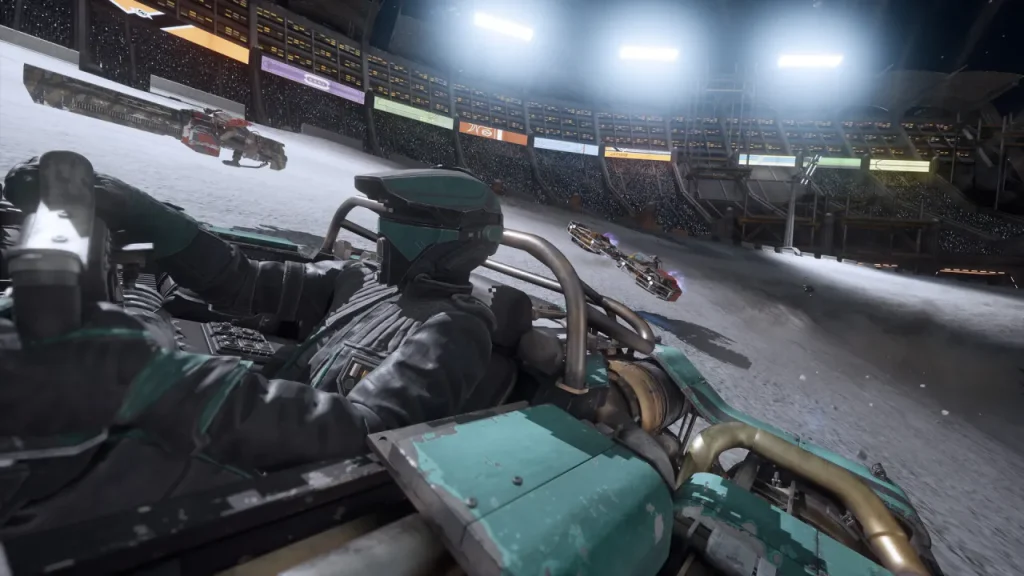
Playing Galactic Racer reminded me of my favorite aspect of recent Forza Horizon games: the opening ten minutes. That initial driving experience is fantastic—it introduces new locales, familiarizes you with the controls, and seamlessly transitions you between tracks, letting you experience various vehicles across diverse environments. You hear the roar of the crowd and the announcer’s excited commentary; you feel the thrill and adrenaline of speeding in a cool car—everything around you blurring into a streak of motion—without ever needing to rely on a rewind feature.
Galactic Racer takes that perfect ten-minute experience and expands it into a full-fledged game. Every moment is exhilarating, and every decision is fraught with tension. Every race offers a valuable opportunity to learn, improve, tweak, and adapt, regardless of whether you ultimately succeed or fail. I can’t wait to keep playing what has become my favorite racing game in years.